
CHEMICAL PEELS
A peel does in a few days what your skin would take months to do on its own. The dull, damaged surface lifts away and what comes up underneath is brighter, more even and noticeably smoother.
NOT ALL PEELS ARE THE SAME
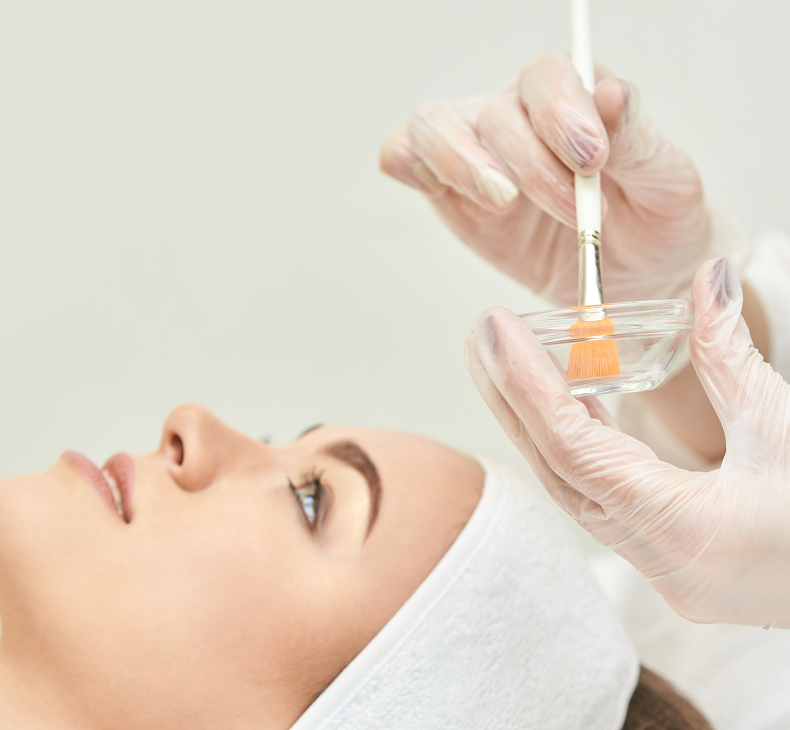
Peel strength is a dial, not a product. A light peel works on the outermost layer, brightens tone and leaves you with a few days of flaking. A medium peel reaches further down to treat pigmentation, acne scarring and sun damage, and asks for real downtime in return. Choosing the wrong depth is how people end up disappointed or irritated. We decide the depth after we look at your skin, your history and what you have planned in the next two weeks.
THE WEEK AFTER, DAY BY DAY
This is the part most websites skip. Knowing the timeline is the difference between trusting the process and panicking on day four.
Skin feels tight and looks slightly flushed or bronzed. Nothing is flaking yet. You can go about your day.
Tightness builds. Fine flaking usually starts around the mouth and nose first, where skin is thinnest.
Peak peeling. This is the day people worry. It is temporary and it is the treatment working.
Peeling finishes. Skin underneath looks brighter and more even, sometimes slightly pink.
Full result settles. Tone looks more uniform and makeup sits better than it did before.
WHAT CAN A PEEL HELP WITH?
Peels are the most direct way to treat the top layers of the skin. If your concern is color and surface quality rather than volume or lines of movement, this is the tool.
HOW MANY YOU NEED
One peel will brighten you. Pigmentation, melasma and acne scarring respond to a course, usually three to six peels spaced four to six weeks apart, with your home care doing just as much work between them. Melasma in particular is managed rather than cured, so expect an ongoing plan with daily sun protection as the non-negotiable part. We will be honest with you about which of those two situations you are in.
FAQ’s
Not always, and that does not mean it failed. Some people shed so lightly it is barely visible, particularly with lighter peels or if your skin turns over quickly. The exfoliation is happening at the cellular level whether you can see flakes or not. Judge the result at two weeks, not day four.
Light peels, usually the next day. Medium peels, give it until the peeling has finished, typically five to seven days. Putting makeup on actively shedding skin tends to look worse than going without, and picking at lifting skin is the fastest way to cause a mark that lasts.
Yes, with the right peel and the right preparation. Deeper skin tones and melasma-prone skin carry a real risk of post-inflammatory hyperpigmentation if a peel is too aggressive, so we go lighter, build slowly and often prep your skin for a few weeks beforehand. Strict daily SPF is part of the treatment, not an afterthought.
We will not peel over active cold sores, open or infected skin, or a sunburn. If you have used isotretinoin in the last six months, are pregnant or breastfeeding, have been using a prescription retinoid, or have a recent tan or self-tanner, tell us. Several of those mean rescheduling rather than ruling it out entirely.
Give yourself at least two weeks between a peel and anything important, and three if it is a medium peel. Booking a peel the week of a wedding is the single most common mistake we see. If you have something coming up soon, a Préime DermaFacial will give you the glow without the shedding.